Let’s talk about the business card graveyard.
You know exactly what I mean. It’s that desk drawer or the bottom of your laptop bag where every card from the last five conferences goes to die. You never call those people. You barely remember their faces. And let’s be honest, half of those numbers are probably disconnected by now.
We’ve all been there. You have a great conversation with someone, you swap paper cards, and then you both walk away and lose the information.
That whole ritual is outdated. It’s time to upgrade to a digital business card.
The global market for these tools jumped from roughly $204 million in 2024 to nearly $229 million in 2025. Analysts expect it to balloon past $576 million by 2033. This isn't just a trend for tech bros. It’s how modern professionals are networking.
Here is the breakdown of what a digital business card actually is, how it works, and why you should care.
So, What Exactly Is a Digital Business Card?
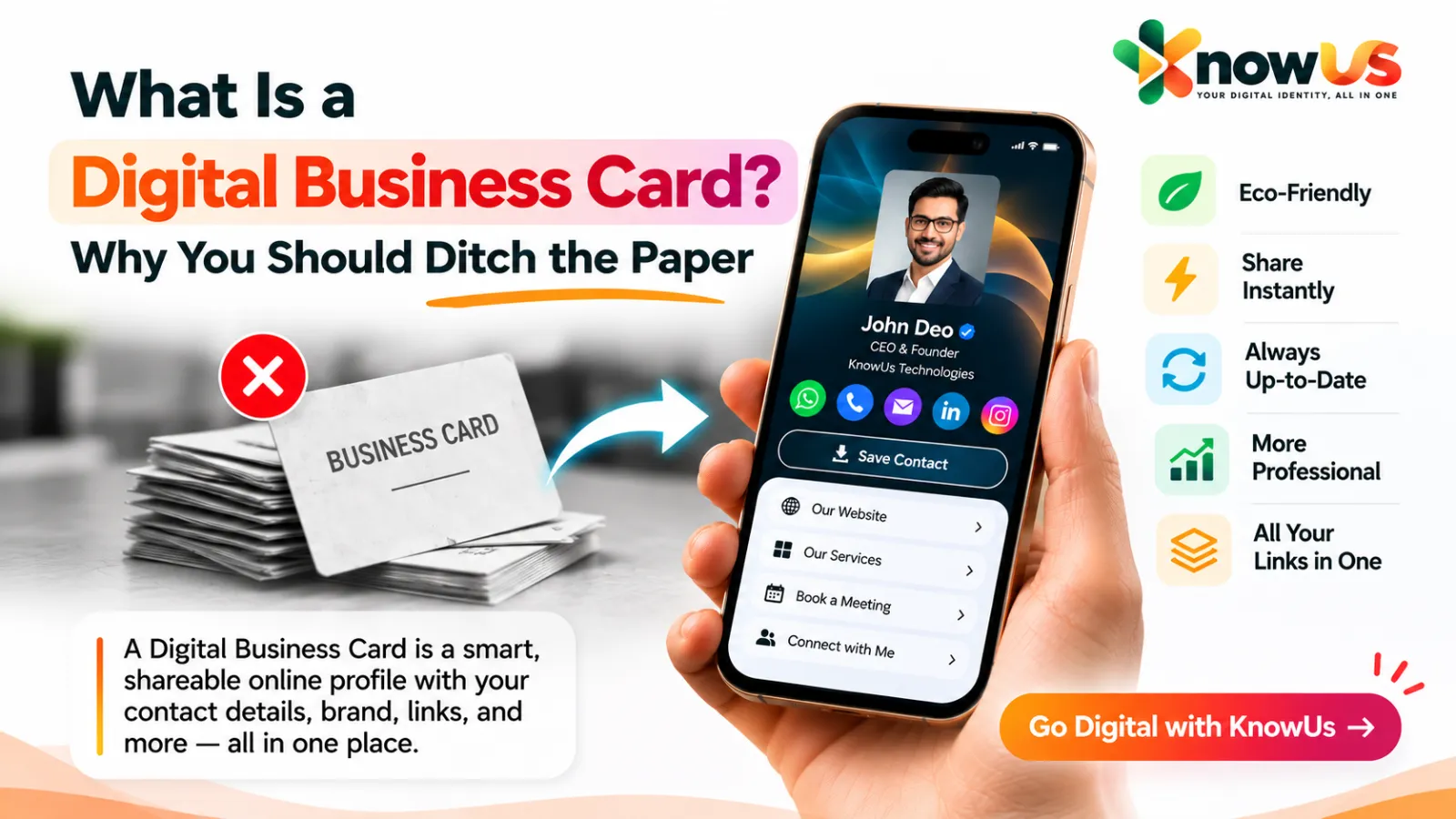
Put simply, a digital business card (often called a virtual business card, electronic business card, smart business card, or digital visiting card) is an online profile used to share your contact info.
Think of it as a mini-website that lives on your phone.
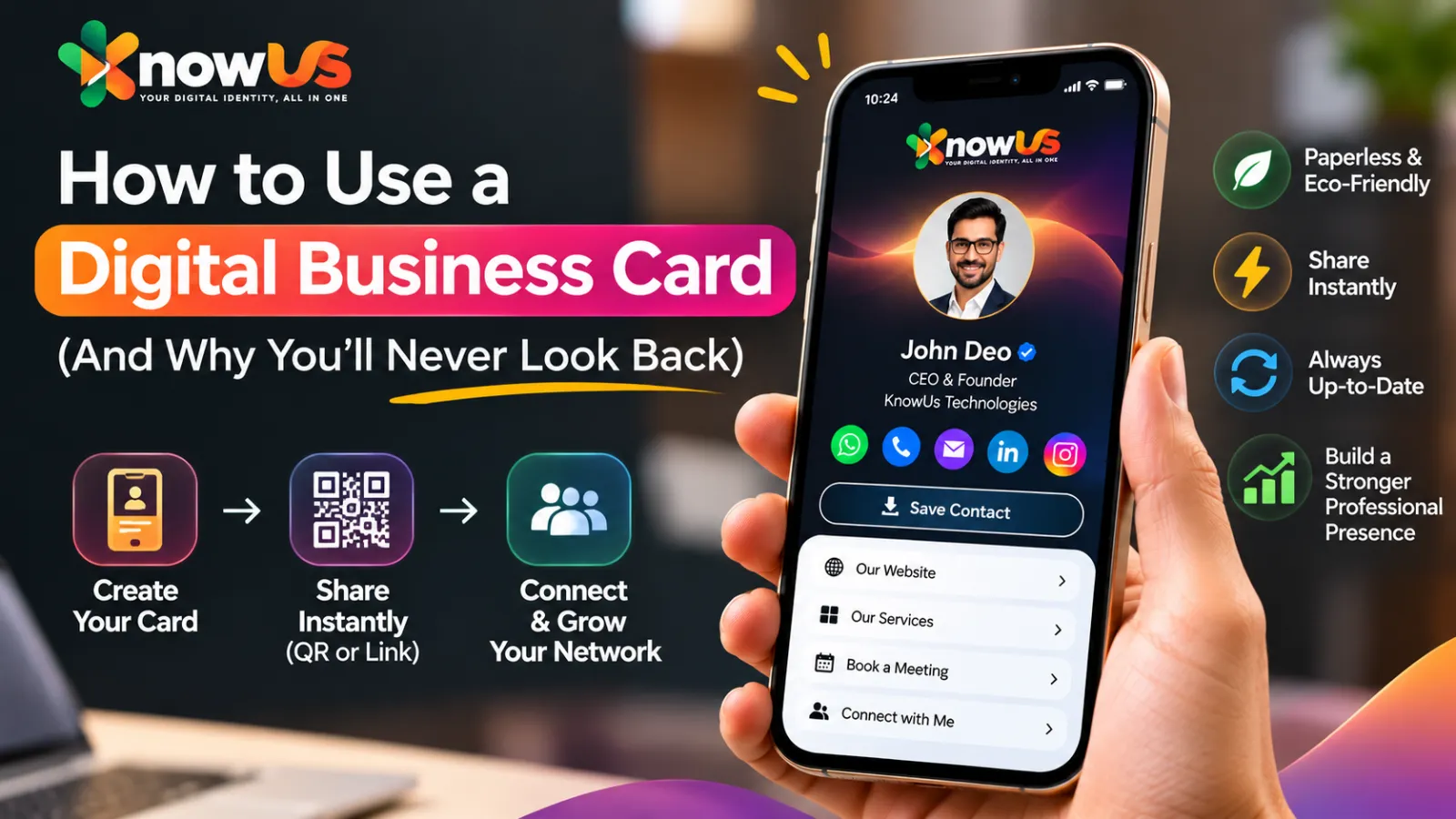
You don’t hand someone a piece of cardboard. Instead, they scan a QR code, click a link, or tap their phone against yours.
The biggest advantage? There are absolutely no space constraints.
A paper card gives you a tiny rectangle for your name, title, and phone number. That’s it. A digital card lets you add as much or as little information as you want. You can build it on your iPhone, iPad, Android, or computer.
Want to add a video introduction? Go for it. Need to attach a PDF of your product catalogue? Easy. Here’s what you can pack into a modern digital card:
Standard contact info: Name, company, email, and phone.
Rich media: High-res photos, logos, or intro videos.
Social proof: Links to your LinkedIn, X, or Instagram profiles.
Resources: PDFs, case studies, or your resume.
Action tools: A direct link to book a meeting on your calendar.
The Hidden Cost of Paper Cards
I was talking to a sales director last month who told me a nightmare story. Their company spent a few thousand dollars printing new business cards for a team of 40 people. By the time the cards arrived, two top reps had quit, and three others had been promoted.
They had to throw the new cards in the trash and order more.
That is the fundamental flaw with paper. It goes out of date the second it’s printed. A digital card is dynamic. If you change roles, you just log in and update your title. Everyone who already has your card sees the update instantly.
And then there is the environmental impact. It’s staggering. We print about 10 billion business cards every single year. Roughly 88% of them get thrown away within a week. For a company with 10,000 employees, traditional cards generate nearly 3.8 metric tons of CO₂ per year, along with massive water and paper waste.
Switching to digital cuts that carbon footprint by 99.9%. It drops down to just 3.6 kg of CO₂ for the same scale. Sustainability isn't just a buzzword anymore; it's a business requirement. Paper cards fail that test every time.
How the Tech Works: NFC vs. QR Codes
Sharing a digital card shouldn't be a headache. The best platforms rely on two main technologies to make connections happen:
1. QR Codes:
This is the universal fallback. You pull up your card on your screen, the other person points their camera at it, and your profile opens in their browser. No app downloads required. It works on any smartphone, and it’s great for printed materials or email signatures.
2. NFC (Near-Field Communication):
This is the "tap" technology. If you have an NFC-enabled card (like a smart card) or an NFC-enabled phone, you just tap it against the other person’s phone. Your profile pops up instantly.
Why use both? Because not every phone has NFC turned on, and some older models don't support it. A smart setup uses NFC for that instant, cool-factor tap, but keeps a QR code ready as a reliable backup.
Data shows this is working. A recent study found that 57% of professionals value easy contact saving, and 56% value the ability to update information. Among Gen Z, NFC card adoption is double the overall average.
What Makes a Good Platform? (Features to Look For)
Not all digital business cards are created equal. If you’re looking at platforms for yourself or your team, don’t just look at how pretty the card is. Look at the backend.
Here is what you actually need:
CRM Integration: The tool should sync directly with Salesforce, HubSpot, or Slack. When you meet a lead, their info goes straight into your pipeline.
Analytics: A paper card can't tell you if it got thrown in the trash. A digital card tracks views, link clicks, and shares. You get actual data on your networking efforts.
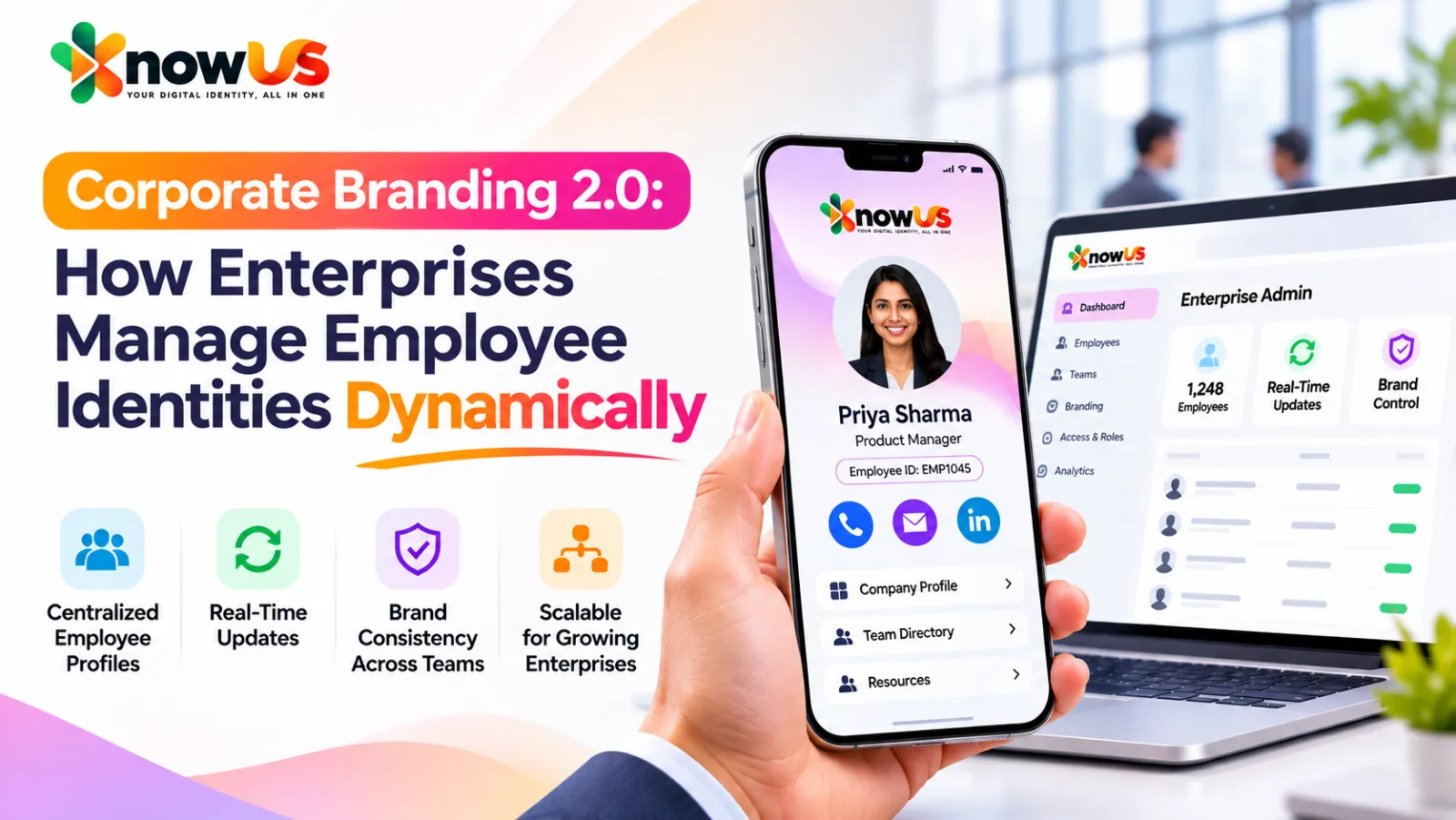
Brand Governance: If you manage a team, this is crucial. You need a platform where admins can lock the company logo, colors, and layout. Employees can add their photo and name, but they can't mess up the brand.
Lead Capture Forms: Some tools let you build custom forms so you can grab exactly the info you need right when you meet someone.
Real-World Ways People Use Them
You don’t have to be a tech giant to benefit. Here’s how different people use digital cards in the real world:
Freelancers: Instead of carrying a physical portfolio, a designer can share a digital card that links directly to their latest work. They update the link every time they finish a project.
Sales Teams: A rep at a trade show taps their card to a prospect’s phone. The prospect immediately gets the rep’s calendar link and a product PDF.
Real Estate Agents: An agent shares a card with current property listings, a booking link for viewings, and a direct WhatsApp link.
Executives: A simple, polished profile with a bio, a professional headshot, and a booking link for speaking gigs or meetings.
The goal is always the same: make it ridiculously easy for someone to remember you and get in touch.
Legal and Practical Things to Watch Out For
Before you dive in, keep a few things in mind.
Privacy Laws: Make sure whatever platform you use complies with GDPR and CCPA. You need control over what data you collect and who can see it.
App Fatigue: The best digital cards are web-based. The person receiving your card shouldn't have to download an app just to see your phone number.
Battery Life: If you rely entirely on your phone for networking, you need to keep it charged. An NFC smart card is great because it doesn't need a battery to work.
The Bottom Line
A digital business card is a smarter, faster, and more flexible way to introduce yourself. It saves money, cuts down on waste, and ensures your information is always up to date.
You don't need to throw away every paper card you own tomorrow. But at your next networking event, try leaving the cardstock at home. One quick tap or scan can turn a brief conversation into a lasting connection.