Imagine attending a business conference, meeting 20 potential clients, and distributing 20 business cards. Everyone smiles, accepts your card, and promises to get in touch.
But what happens next?
Some cards end up inside office drawers. Others get misplaced, forgotten, or thrown away. And the contact you hoped would become your next customer might never reach you again.
This is one of the biggest challenges of traditional business networking.
In 2026, the way professionals connect, share information, and build business relationships is changing. Smartphones, QR codes, NFC technology, and digital networking platforms are replacing many traditional ways of exchanging contact details.
A digital business card is no longer just a modern alternative to paper. It is becoming an essential networking tool for entrepreneurs, freelancers, sales professionals, business owners, and growing companies.
In this article, we explore 15 business card statistics and digital networking trends that explain why businesses should consider making the switch in 2026.
The Problem With Traditional Paper Business Cards
1. Around 100 Billion Business Cards Are Printed Annually
Traditional business cards continue to be used across industries worldwide. Estimates frequently cited in the printing industry suggest that approximately 100 billion business cards are printed every year.
That's an enormous number of printed cards, considering that professionals now have smartphones capable of storing and sharing contact information instantly.
Businesses are increasingly exploring digital alternatives to reduce printing dependency and simplify networking.
2. Approximately 88% of Business Cards Are Reportedly Discarded Within a Week
One of the most frequently quoted business card statistics suggests that approximately 88% of paper business cards are discarded within a week.
Think about the money spent on designing, printing, and distributing those cards.
A traditional card has limited space and can easily be misplaced. Even when someone wants to contact you later, finding your card can become a challenge.
Digital business cards solve this problem by allowing recipients to save your contact information directly to their smartphones.
3. Traditional Business Cards Have Limited Storage Capacity
A paper business card usually contains:
Name and designation
Company name
Phone number
Email address
Website
Office address
But what if you also want to share your portfolio, social media profiles, product catalogue, services, videos, or appointment links?
You would need additional brochures, flyers, or documents.
A digital business card can bring all these details together in one shareable profile.
4. Updating Paper Business Cards Costs Time and Money
Imagine changing your phone number, job title, company address, or website.
With traditional business cards, you may need to redesign and print an entirely new batch.
Digital business cards make updates much easier. You can modify your information online without distributing a completely new set of cards.
This is particularly useful for growing businesses and professionals whose contact details or services change frequently.
5. Paper Business Cards Create Unnecessary Paper Waste
Traditional business cards require paper, printing materials, packaging, and transportation.
When millions of cards are printed and many are eventually discarded, the environmental impact becomes worth considering.
Digital networking reduces the need for repeated physical printing and helps businesses move towards more sustainable communication practices.
Digital Business Cards: Adoption and Growth in 2026
6. Digital Networking Is Becoming a Standard Business Practice
Remote work, hybrid offices, online meetings, and international business communication have changed how professionals exchange information.
People increasingly expect to receive clickable contact details rather than manually type information from a printed card.
Digital business cards make networking convenient whether you are meeting someone physically or connecting through an online meeting.
7. QR Codes Have Made Contact Sharing Easier
QR codes have become a familiar part of everyday life.
People use them to access websites, make payments, view menus, register for events, and explore product information.
Digital business cards use the same technology to make professional networking simpler.
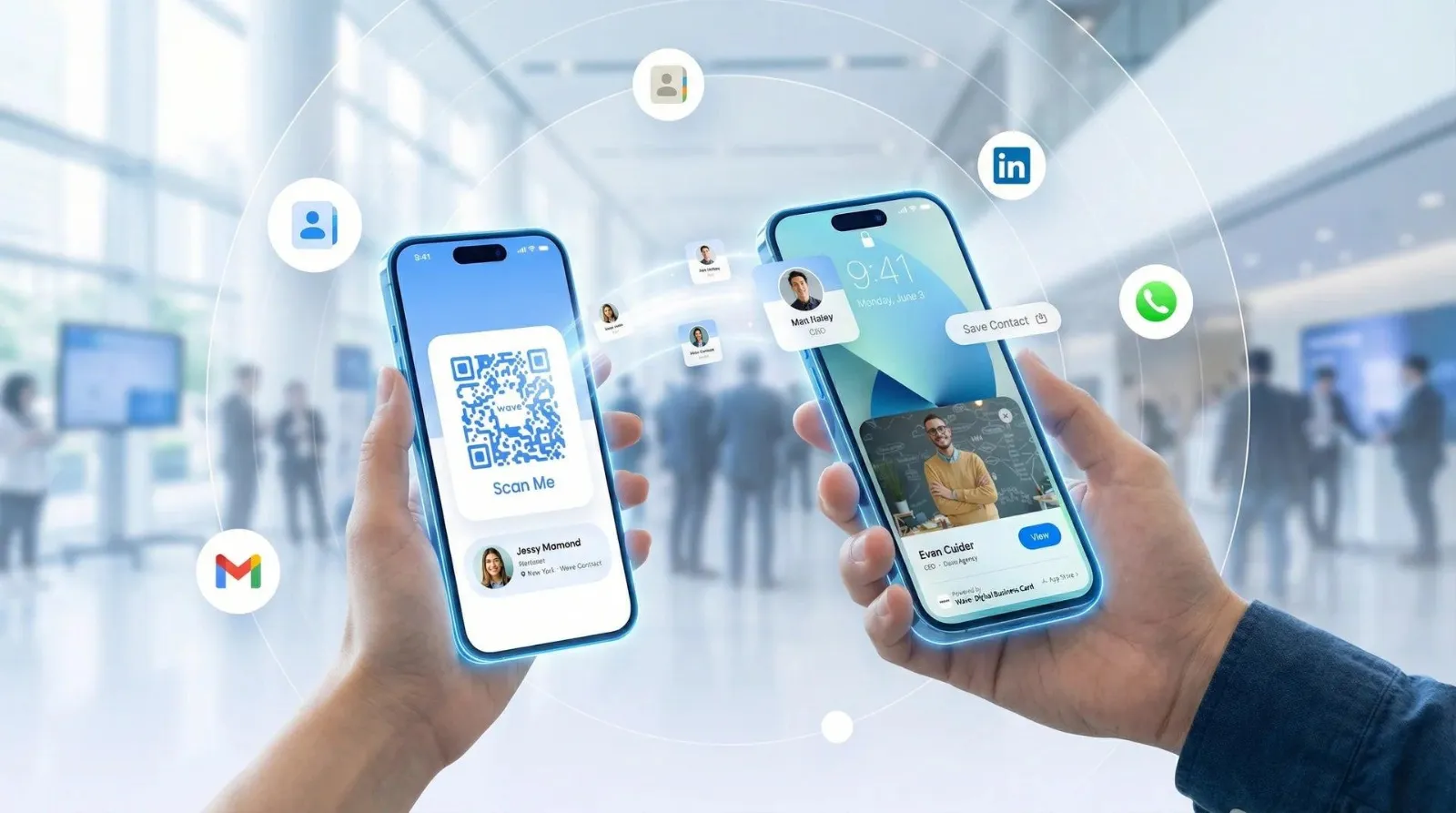
A person can scan a QR code and instantly open your digital business profile.
No complicated process. No manual typing. No need to install an additional application just to view your profile.
8. NFC Technology Is Changing How Professionals Share Contacts
Near Field Communication (NFC) allows compatible devices to exchange information when brought close together.
NFC-enabled business cards offer another convenient way to share digital profiles.
Instead of handing someone a traditional paper card, you can use an NFC card to direct them to your digital business profile.
This creates a modern networking experience for:
Entrepreneurs
Corporate executives
Sales professionals
Real estate agents
Consultants
Business owners
9. Digital Business Cards Work Beyond Physical Networking Events
Traditional business cards are generally exchanged during face-to-face meetings.
Digital business cards can be shared through multiple channels:
WhatsApp messages
Email signatures
LinkedIn profiles
Social media
Websites
QR codes
NFC cards
This means your professional identity can be shared even when you are not physically present.
The Business Benefits of Going Digital
10. Digital Business Cards Make Contact Sharing Faster
Sharing contact details should not interrupt a business conversation.
With a digital business card, you can simply display a QR code or share a link.
The recipient can open your profile and access your contact details within seconds.
This removes unnecessary steps and makes professional introductions smoother.
11. Digital Business Cards Make Follow-Ups Easier
Networking is not just about meeting people. It is about maintaining relationships after the meeting.
When someone receives your digital profile, they can access your phone number, email address, website, and social media links directly.
Clickable contact information makes it easier to:
Call a potential customer.
Send an email.
Visit your website.
Explore your services.
Connect on LinkedIn.
Save your contact details.
The easier you make it for people to reach you, the fewer barriers stand between an introduction and a meaningful business conversation.
12. One Digital Profile Can Showcase Your Entire Business
A traditional card introduces you. A digital business profile can tell your complete business story.
Instead of limiting yourself to basic contact details, you can showcase:
Professional profile and company information
Business website and social media links
Products and services
Portfolio and work samples
Videos and promotional content
Enquiry and contact options
This makes digital business cards particularly valuable for professionals who want to build a stronger online presence.
13. Digital Business Cards Can Reduce Reprinting Expenses
Businesses with multiple employees frequently spend money printing and distributing business cards.
Whenever an employee joins, leaves, or changes their designation, additional printing may be required.
Digital business cards offer a more flexible alternative.
Businesses can manage employee profiles, update information, and maintain consistent branding without repeatedly ordering printed cards.
The actual savings depend on company size, platform pricing, and existing printing expenses.
QR Codes and the Future of Business Networking
14. QR Code Business Cards Connect Offline and Online Networking
One of the biggest advantages of QR-enabled digital business cards is that they connect physical interactions with digital experiences.
For example:
A business owner attends an exhibition and displays a QR code on their desk.
A visitor scans it and opens the business profile.
The visitor can explore services, view products, save contact information, and submit an enquiry.
A simple scan can become the starting point of a potential business relationship.
QR codes can also be placed on:
Visiting cards
Office reception desks
Product packaging
Marketing brochures
Event banners
Business presentations
Promotional materials
15. Your Digital Business Identity Can Be Shared Across Multiple Platforms
Modern professionals need more than one communication channel.
Your business identity should be accessible wherever your potential customers interact with you.
A digital business profile makes it possible to maintain one central destination for your professional information.
Instead of sharing five different links, you can share one digital profile containing everything people need to know about you and your business.
This is where platforms like KnowUs become useful.
Why Businesses Are Choosing KnowUs in 2026
KnowUs.me is designed to make professional networking and digital business identity management easier.
Instead of relying entirely on traditional visiting cards, professionals and businesses can create a digital presence that is simple to share, easy to manage, and accessible from smartphones.
Here is how KnowUs can help modern businesses.
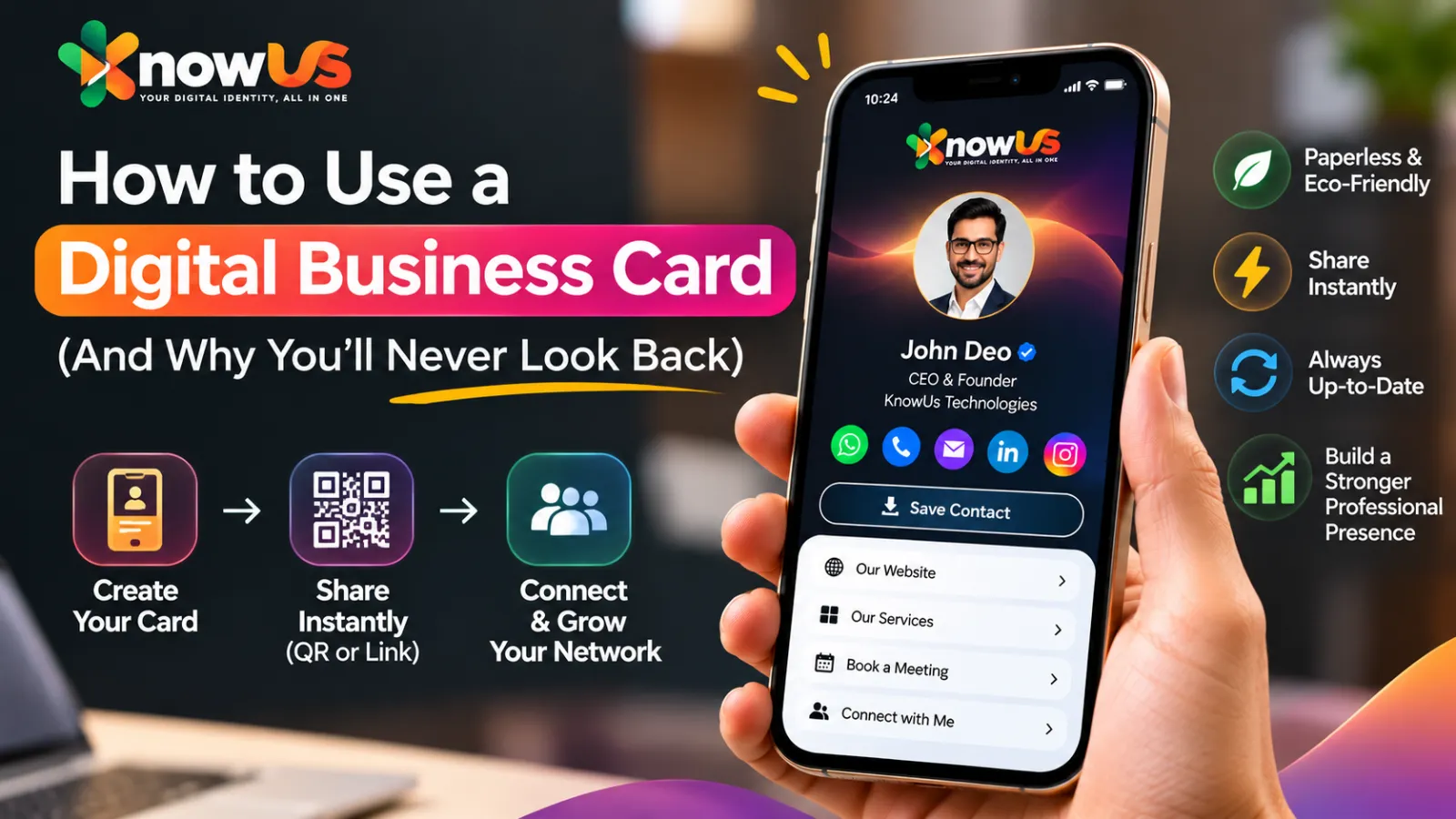
1. Digital Business Cards
Make your first impression count.
Create a professional digital business profile containing your name, designation, company information, contact details, and important links.
Share your profile whenever and wherever you connect with potential clients.
2. Smart QR Code Sharing
One scan. Multiple possibilities.
Generate QR-enabled experiences that help people access your digital business profile without manually entering contact information.
Use QR codes on visiting cards, brochures, office displays, and promotional materials.
3. NFC Business Card Experience
Share your professional identity with a simple tap.
Combine NFC technology with your digital business profile to offer a convenient and modern contact-sharing experience.
It is particularly useful for executives, entrepreneurs, consultants, and sales teams.
4. Digital Product Catalogues
Showcase what you sell without carrying multiple brochures.
Present your products and services through an accessible digital catalogue.
Share product information with potential customers and make it easier for them to explore your offerings.
5. Business Applications and Lead Generation
Turn professional connections into business opportunities.
Give customers a convenient way to explore your business and submit enquiries.
Digital business experiences can help simplify communication and make it easier for potential customers to connect with your team.
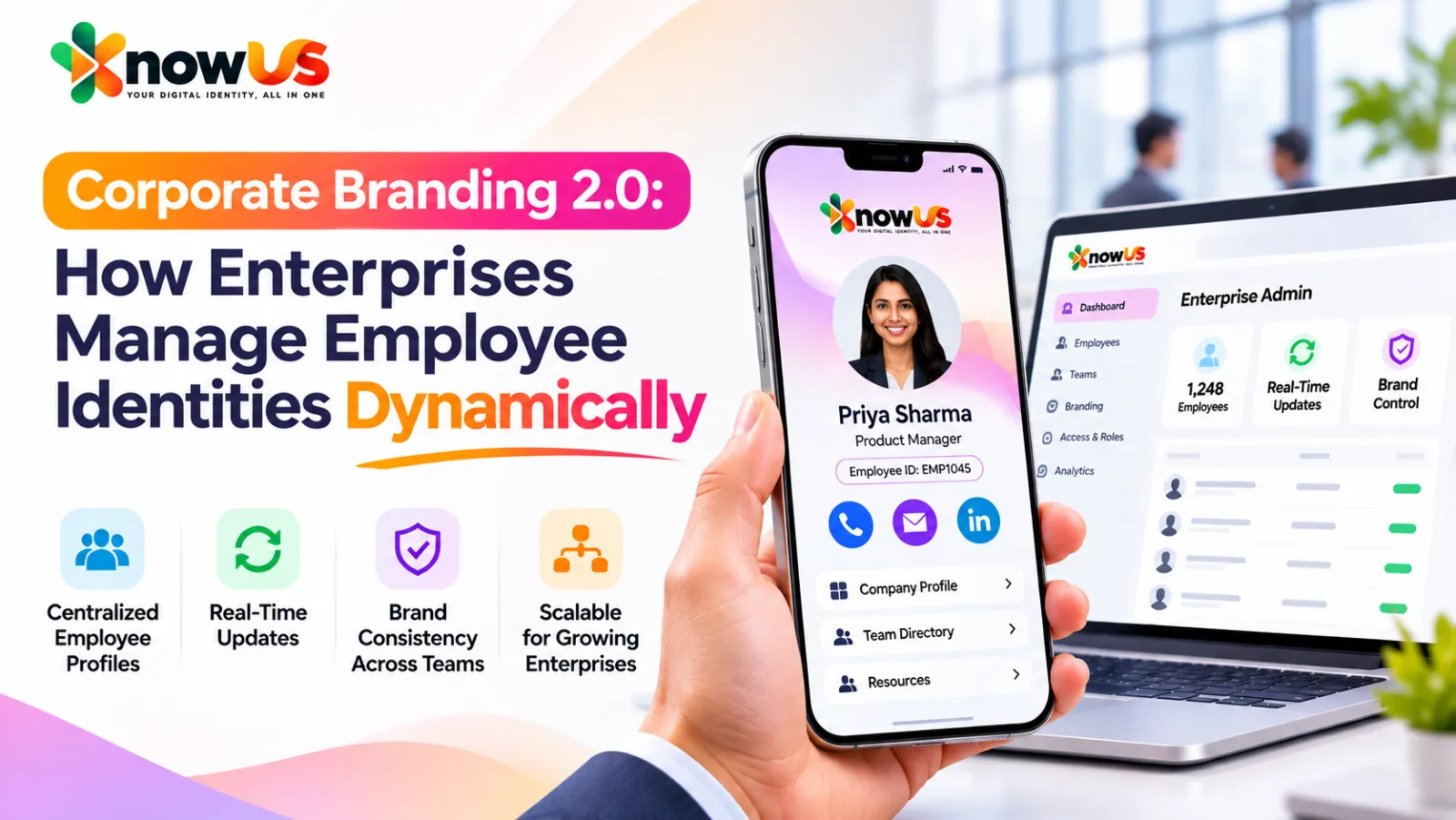
6. Employee and Team Business Profiles
Give your entire team a consistent digital identity.
Businesses can create professional digital experiences for employees and maintain consistent branding across their teams.
This is especially useful for companies with sales representatives, client-facing employees, and distributed teams.
Paper Business Card vs Digital Business Card: Which Is Better?
FeaturePaper Business CardDigital Business CardContact sharingPhysical exchangeQR, link, or NFCInformation updatesRequires reprintingOnline updatesContact storagePhysical cardDigital contact savingWebsite linksUsually printed as textClickable linksSocial mediaLimited spaceMultiple social linksProduct showcaseRequires brochuresDigital catalogueLead generationRequires separate processCan integrate enquiry optionsSharing remotelyDifficultEasyPrinting expensesRecurringNo routine card reprintingAccessibilityPhysical possession requiredAccessible through a shared link
The verdict: Paper business cards can still be useful in certain situations, but digital business cards offer greater flexibility, richer information, and more convenient sharing options.
How to Create a Digital Business Card With KnowUs
Getting started with digital networking does not need to be complicated.
Follow these simple steps:
Step 1: Create Your Account
Visit KnowUs.me and get started with your digital business presence.
Step 2: Add Your Professional Information
Enter your name, designation, company details, contact information, and professional links.
Step 3: Personalize Your Digital Profile
Create a professional-looking profile that represents your brand and business identity.
Step 4: Add Your Products and Services
Showcase your business offerings through relevant information and digital catalogues.
Step 5: Share Your Digital Business Card
Share your profile using a QR code, direct link, or compatible NFC experience.
Step 6: Start Networking Digitally
Let potential customers and professional contacts explore your profile and connect with your business.
Conclusion: The Future of Networking Is Digital
The way people connect professionally is evolving.
Traditional business cards served an important purpose for decades, but modern businesses need more flexible ways to communicate, showcase services, and generate opportunities.
Digital business cards make it easier to share contact details, update professional information, showcase products, and connect with potential customers.
QR codes and NFC technology are making this transition even more convenient.
You don't need to carry hundreds of printed cards or worry about outdated contact details. You need one professional digital identity that you can share anywhere.
Make every connection count with KnowUs.
Create your digital business presence today and experience a smarter way to network.
Visit KnowUs.me and take your business networking digital.
Frequently Asked Questions (FAQs)
1. What is a digital business card?
A digital business card is an online version of a traditional visiting card. It contains professional information such as your name, phone number, email, company details, website, and social media links. It can be shared through QR codes, links, and NFC-enabled devices.
2. Are digital business cards better than paper business cards?
Digital business cards offer several advantages, including easier updates, clickable contact details, online accessibility, and the ability to showcase products and services. Paper cards can still be useful, but digital cards provide greater flexibility.
3. How do QR code business cards work?
A QR code business card contains a scannable code that directs users to your digital business profile. Once scanned, recipients can view your information, access links, and save your contact details.
4. Can I share my digital business card on WhatsApp?
Yes. You can share your digital business card link through WhatsApp, email, LinkedIn, social media, and other communication platforms.
5. Do customers need an application to view a digital business card?
A web-based digital business card can be opened directly in a smartphone browser. Recipients generally do not need to install a separate application to view the profile.
6. Can businesses create digital business cards for employees?
Yes. Digital business card platforms can help businesses maintain consistent professional profiles for employees, sales representatives, and management teams.
7. What is the difference between an NFC business card and a QR code business card?
A QR code is scanned using a smartphone camera, whereas an NFC business card shares information when a compatible device is brought close to it. Both can direct users to the same digital business profile.
8. Where can I create a digital business card?
You can explore KnowUs.me to create a professional digital business presence and discover modern networking solutions for individuals and businesses.